When it was first announced in 2022 that the BBC was thinking of scrapping its digital only radio station 4Extra I was shocked and outraged enough to write the following piece for Medium.
Now that the decision is final and 4Extra will cease broadcasting in Spring 2027, I wanted to re-publish what I wrote then as I feel even more outraged and saddened four years on than I did then.
It's such a waste and the BBC clearly isn't going to realise what it's lost until it's far, far too late.
Anyone wanting to read more about 4Extra might want to check out the two posts I wrote in January early 2023 about the audacious experiment that was Jake Yapp's Unwinding. The first of which you can read here, and the second of which you can read here. We will never see it's like again.
A Love Letter to BBC Radio 4Extra
The BBC launched its digital radio station BBC7, later 4Extra, in 2002. Now it plans to close it
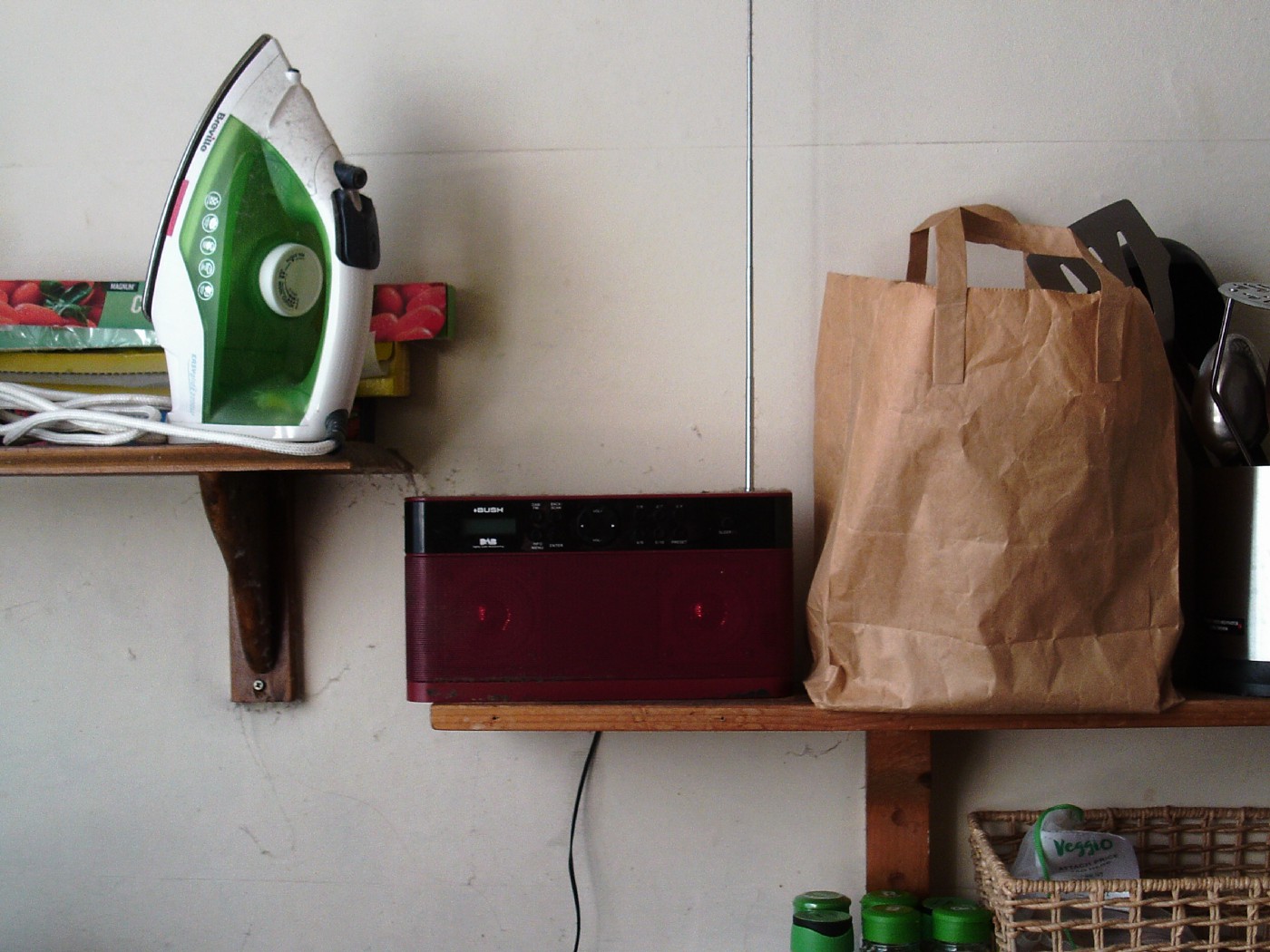
When I first heard in late May that BBC Director General Tim Davie planned to scrap 4Extra, I was not exactly surprised (to my mind, the BBC have never really understood the popularity of the station) but I was very saddened. It all seemed so pointless.
The closure is part of a series of cuts over the next couple of years which are meant to make up for the deficit caused by the UK government freezing the BBC licence fee. But 4Extra only costs the corporation £3 million a year. Or, as a recent episode of Radio 4’s Feedback programme put it, “Two Gary Linekar’s”. Scrapping the station wouldn’t even touch the financial black hole the BBC finds itself in, so why do it?
Is the BBC’s relationship with the station akin to the one that ITV had with its ratings busting show Heartbeat? A show that was massively successful but in such a way (for its gentle, nostalgic characters and storylines), and with such an audience (older viewers) that the station was utterly embarrassed by it and ended up killing the show off?
There could be something in this, if only because 4Extra punches above its weight in terms of listeners (RAJAR figures for February 2022 report 4Extra’s listeners at 1.89million, more than Radio 1Xtra, which is not being threatened with the axe) and, yes, it is stereotyped as the station where pensioners go to listen to repeats of Hancocks Half Hour and The Goon Show.
But to stereotype 4Extra in this way is to underestimate the variety and breadth of its programming.
The station has, over the past twenty years, commissioned some exceptionally strong content, particularly Ben Moor’s Sci-Fi comedy Undone (3 series of this cult gem were commissioned by BBC7 and broadcast between 2006 and 2010) and Podcast Radio Hour (a long running review programme for podcasts).
The Comedy Club strand of programming, which broadcasts seven days a week between 10pm and midnight provides good late evening listening to contemporary and recent (ish) British radio comedies, as well as providing regular presenting shifts to the current crop of comedians. A gig that many, I suspect, appreciated during the past two years when Zoom gigs were their main source of income.
During the hell that was the 2019 Brexit negotiations, the station was a refuge for those who needed a break from shouty politics, thanks to its lack of news bulletins or current affairs programming.
In recent years, the station has provided a wider audience for harder to find programming, for example a recent broadcast of a fascinating documentary about the songwriters Roger Cook and Roger Greenaway, which was originally broadcast on BBC Radio Bristol in 2021. They’ve also broadcast content from the US’s NPR such as TED Radio Hour and The Moth Radio Hour, and podcasts such as Serial, which was broadcast on the station in 2014.
Because of its remit, 4Extra can dedicate long hours, weeks and months to themed broadcasting. This would include their broadcast of every episode of every series of The Hitchhikers Guide To The Galaxy at 6:30pm, Monday-Friday, for months, with no break between series. It might not have been original content, but it’s a feat that needs saluting all the same.
On the subject of the stations Sci Fi content, it should also be pointed out that — for me — a key part of the stations appeal is its stranding pattern: You know that if you turn on between 6pm and 7pm it’s Sci Fi/Fantasy/Horror, 7pm — 8pm is vintage comedy, 8–9pm is crime and thrillers, and so on.
Some of the shows 4Extra introduced me to would include the aforementioned Undone, Andy Hamilton’s sitcom set in Hell Old Harry’s Game, the surreal opus that is The Brightonomicon, Dr Phil Hammond’s NHS GP satire Polyoaks, multiple Simon Brett comedies, the impeccable Natalie Haynes Stands Up For The Classics, the delightfully eccentric Big Science with Helen Keen, Noirish Roman gumshoe Falco, Medieval slueth Cadfael, the whimsically amusing The Blackburn Files, the moreish To Hull And Back, and 1980s cop drama Detective. Regardless of the schedule, it should also be said (and a recent contributor to Feedback mentioned this) that the station is an absolute godsend after midnight if you can’t sleep.
Critics will tell you that 4Extra is cosy, comfortable. Like a pair of slippers. But, as the commissioning of Undone and the audience sourced satire show Newsjack demonstrate, the station is also innovative. A case in point is its long running Friday night show Podcast Radio Hour. Just as, years ago, John Peels Radio 1 show made musical sense of Riot Grrrl for me, so Radio 4Extra was the station to demonstrate to me not only what a podcast was, but also why they were so popular. This was because it took the bold step of broadcasting the whole of series 1 of Serial on week nights over several weeks in 2014. When Podcast Radio Hour was launched not long after, I felt as though I’d been given the keys to the podcast cupboard: The show introduced me to the likes of Best Pick, Reasons To Be Cheerful, and We Are History.
I first began listening to 4Extra via the digibox/TV back when it was still BBC7 and I was still living at home. Often dad and I couldn’t find anything on TV to watch so we’d listen to some of the radio adaptations of novels, particularly Whiskey Galore and Cold Comfort Farm.
Once I’d left home I saved up to buy a digital radio so that I could listen to 6Music. But I found myself listening to 4Extra a lot more, especially on weekday evenings once I’d got in from work. I could cook to Hancocks Half Hour, Round The Horne, The Navy Lark or The Goon Show, all shows I’d heard on BBC cassettes years ago.
I purchased a portable digital radio a couple of years later in order to listen to The Comedy Club in bed. Once 4Extra is taken off the air, and is only available via BBC Sounds, I’ll have to fork out several hundred pounds for a smartphone in order to listen in bed. And that’s only going to be an option if 4Extra exists online in its current recognisable form, rather than being absorbed into BBC Sounds as non-structured ‘content’.
Judging from the volume of upset letters back in May to the Radio Times, and to the similarly large and upset volume of correspondence to last weeks episode of Feedback, I have come to the conclusion that I am very far from alone in my sense of sadness at the BBC’s decision to scrap the station.
What has made me angry has been the vagueness of the announcement, and the failure of Tim Davie to in any way defend or justify his decision to scrap the station. Is he hoping to whip up a storm that will see the station saved? This worked for 6Music and the Asian Network when they were under the axe. Or does he just not care? It could be that he expects the 4Extra audience to die off soon and, as such, suspects the outcry won’t last long. I hope that I am mistaken, but it doesn’t look good.

